
Tourism Strategy
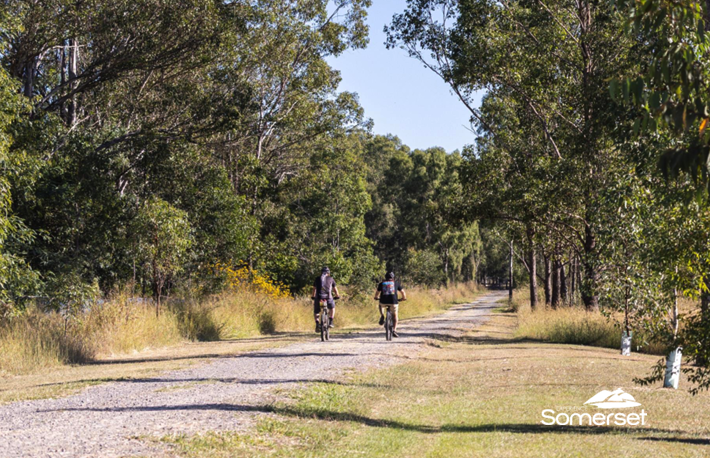
Somerset region
A rural farming community an hour west of Brisbane, Somerset attracts visitors to fish and waterski on Lake Somerset, to ride and walk on Australia’s longest rail trail, and to experience the quiet country life, country villages, and nature.
Project purpose
Somerset Regional Council sought a strategy to clearly outline how the Council can support the visitor economy and how this rural destination so close to Brisbane could leverage the opportunity of the 2032 Brisbane Olympics and Paralympic Games.
They wanted to identify what the team could do that would genuinely make a difference for the visitor economy, and build on what they had achieved in delivering their 2021-2025 tourism strategy.
With ‘strategy fatigue’ the tourism team wanted a six-year strategy rather than having to revisit the strategy development process in just three years.
They also wanted a strategy that was realistic and practical for their small team to deliver over that time period.
Project approach
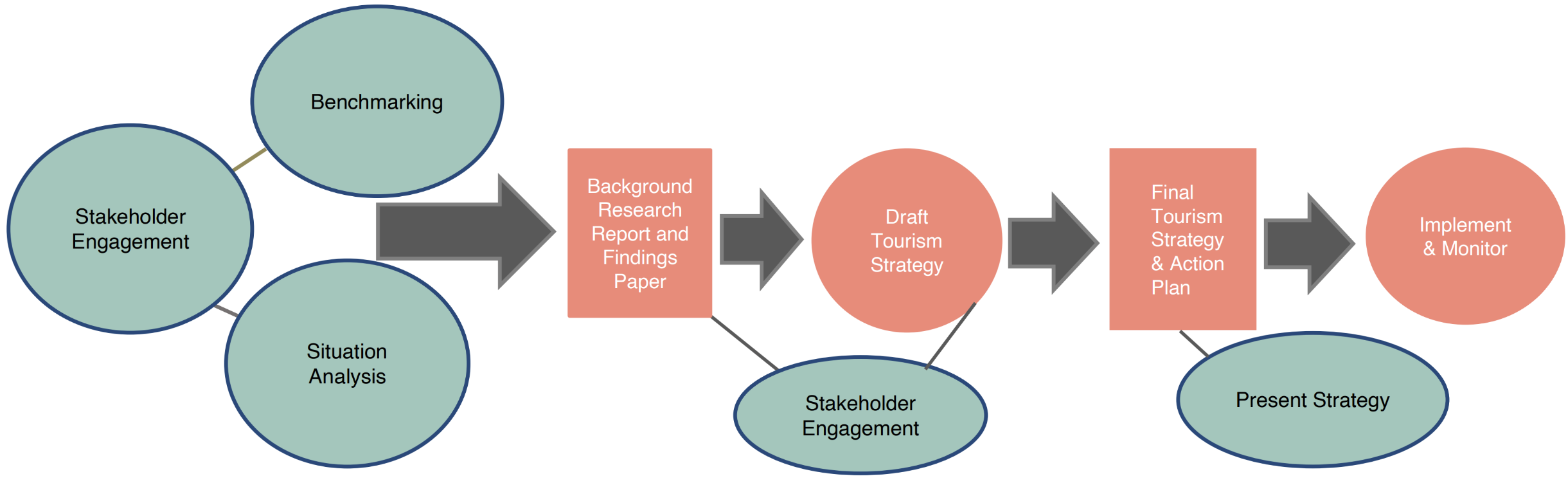
Tilma’s strategy development process
Tilma’s efficient and effective process of developing a tourism strategy begins with a situation analysis, reviewing
Reviewing relevant strategic plans (local, regional, state and national)
Reviewing relevant visitation statistics and information about potential target markets
Reviewing relevant tourism trends
Developing a supply side audit to understand the region’s visitor offering strengths and gaps
Benchmarking, in this case against other competitor near-to-Brisbane rural destinations to identify Somerset’s distinctive and competitive points of difference.
With this deep understanding of the current situation, Tilma undertook extensive industry engagement, based on the Engagement Institute’s trusted engagement process.
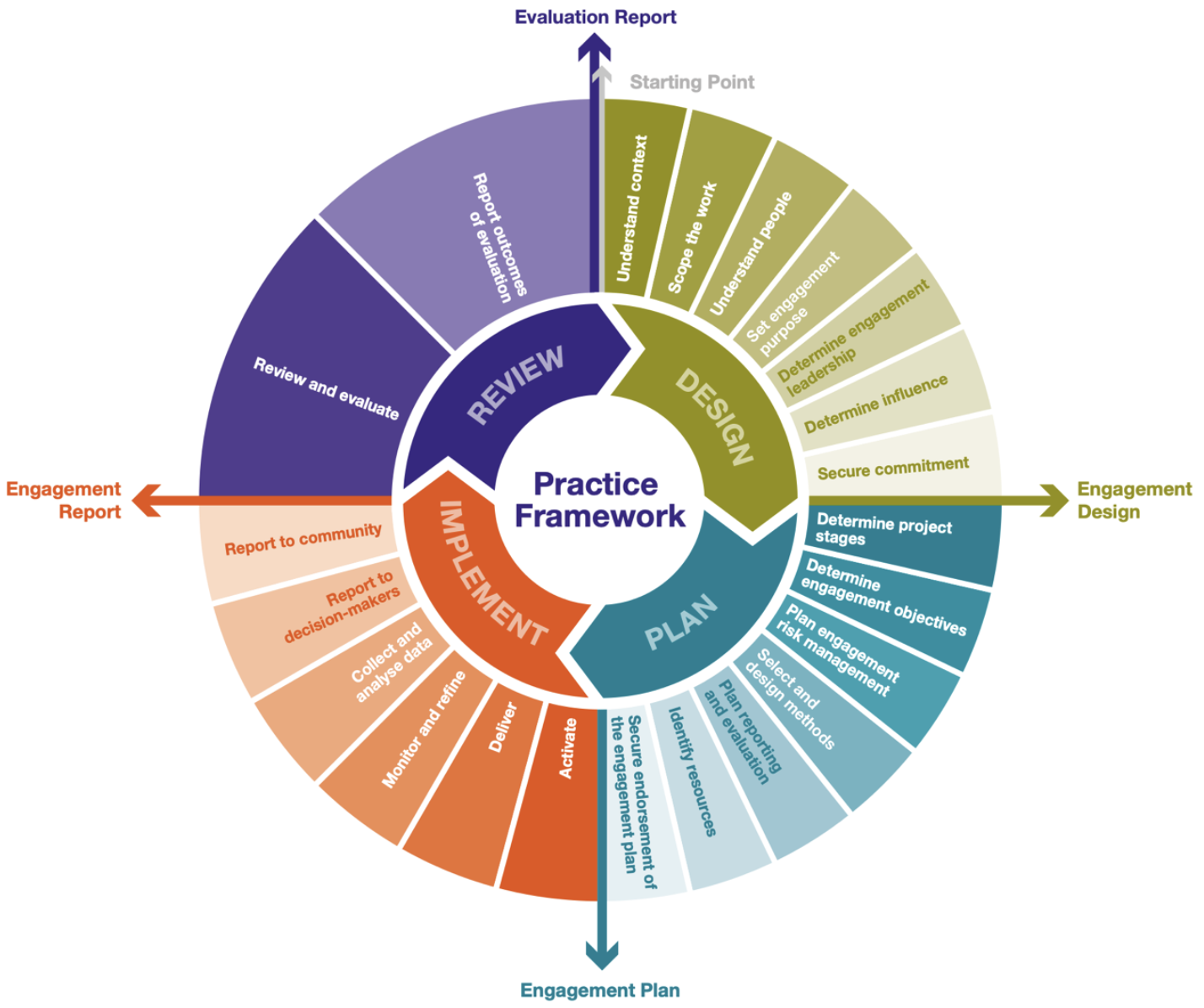
The Engagement Institute’s comprehensive process for stakeholder engagement. Credit: The Engagement Institute
This involved
The co-development with Council’s tourism team of an engagement plan, and mapping out relevant stakeholders.
Both in-region and online engagements, during the day and in the early evening, one on one and in focus groups. Remote engagement and engagement at varied times of day enables busy tourism operators to participate, and for rural regions which are large, remote engagement allows operators from across a broad region to easily come together and bounce ideas off of each other.
Broadly, we asked Somerset’s tourism stakeholders to share what are Somerset’s distinctive differences, what are the gaps in the region’s offering from a visitor’s point of view, what would support the success of tourism businesses, what opportunities should Council support, and what would success look like for the local visitor economy?
Tilma then developed a detailed Situation Analysis report to map out learnings and to form a basis for a second round of consultation to inform the strategy’s development. This involved feedback on key discussion points to enable Tilma to gain clarity on key elements of the strategy, such as priority areas for Council to focus on.
From this further feedback, Tilma developed a draft tourism strategy which was refined with the tourism team, and then published for community feedback on Council’s ‘Have Your Say’ website.
Feedback from industry and the community was very positive, enabling Council to adopt the strategy without further adjustment.
“I just wanted to thank you for the fabulous role you played in putting together the draft tourism strategy for Somerset Council. It’s really good!”
“I just read the Draft Somerset Tourism Strategy. Nice work. I found it very informative and interesting. Nothing in it that I wouldn’t support. ”
Project deliverables
The strategy outlines how Council can strategically support the development of additional tourism offerings, particularly agritourism and nature based tourism offerings, and including events.
It also outlines Council’s roles in destination marketing and visitor servicing to support the visitor economy, and how it can build the capabilities of local tourism operators.
Tilma’s learnings
A key learning for Tilma was from the strategy’s nature-conservation stakeholders. Almost all stakeholders mentioned how special (and common!) it is to see wildlife up close in Somerset. The local knowledge of conservation stakeholders revealed that Somerset is home to wildlife that is locally extinct in the rest of south-east Queensland - a unique competitive advantage, that enables Somerset to leverage the state’s new focus on nature-based tourism.
However, the nature-conservation stakeholders were clear: all tourism developments in nature need proper environmental assessment to understand the impacts of humans and tourism on wildlife, and to protect species that have already lost their homes across the rest of south-east Queensland. For example, the region’s endangered rock wallaby is a species that requires a wide buffer zone from humans, and that cannot simply move if disturbed as there is no similar habitat nearby.
Project outcomes
The strategy was adopted by Council in mid-2026. Progress will be reviewed and reported on in mid-2027.
The following objectives are what Council’s tourism team are working to achieve, and progress on them is now being measured:
Become known by residents of South East Queensland as a destination for country lifestyle, agritourism and nature experiences.
Increase off-season visitation and visitor expenditure.
Increase average visitor expenditure of day-trippers.
Increase the number of experiences and accommodation, including accessible offerings.
Increase the number of Somerset tourism operators who achieve Best of Queensland Experience Program status.
Attract and support more events (the right fit events) and more visiting event attendees.
Connect visitors with Somerset’s nature and wildlife, enabling them to have a deeper appreciation for it.
Referee
Veronica Eagle
Tourism Development Officer
Somerset Regional Council
veagle@somerset.qld.gov.au
07 5424 4000
This project was the second delivered for Somerset Regional Council. The first was a very successful agritourism experience development coaching program.
Destination development
As we helped identify how this rural destination could leverage with its tourism opportunities, so could we also help your destination.