
After more than 20 years working in regional tourism, I've learned to pay attention when the mood of an industry shifts. Right now, Queensland tourism feels like it's entering a new chapter. There is a noticeable sense of momentum, investment and shared ambition across government, industry and tourism organisations.
And you know what? It feels exciting!
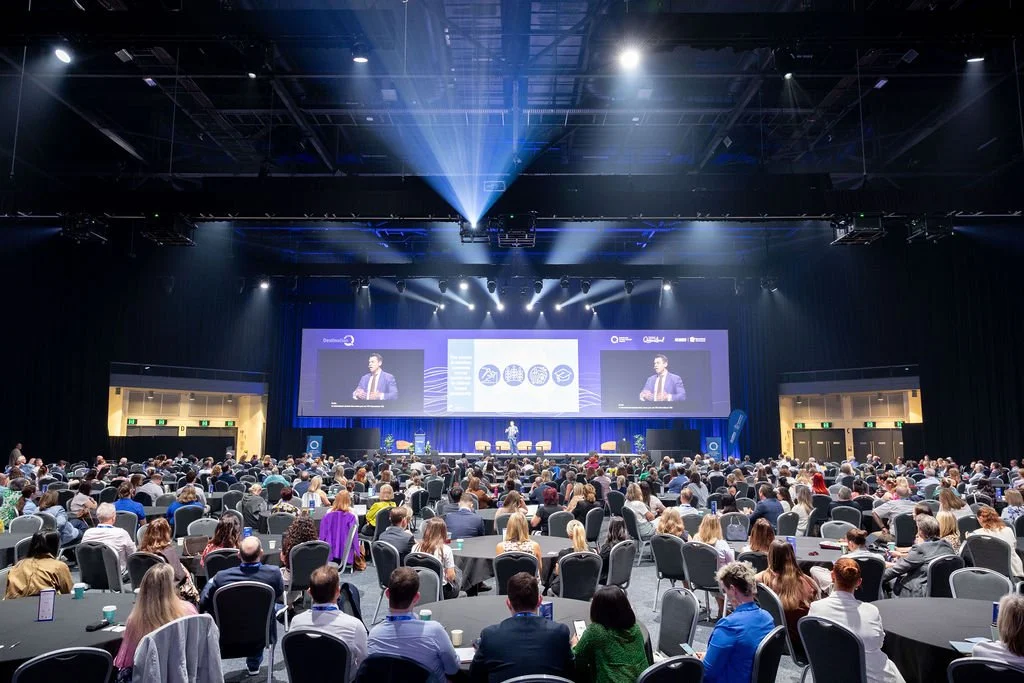
QTIC’s DestinationQ held on the Gold Coast last week. All images supplied by QTIC.
Last week I attended DestinationQ and EventsQ on the Gold Coast as part of Queensland Tourism Week, where industry leaders, operators, tourism organisations, and government came together to discuss the future of tourism in Queensland.
The word of the day was momentum. And you could feel it in the room, genuinely.
What made that momentum feel different was where it was coming from. The Premier, the Minister and state representatives all spoke confidently about the future of tourism, but so did operators, event organisers, tourism organisations and councils. There was a genuine belief that tourism matters to Queensland's future and, importantly, a willingness across different parts of government to work together to remove barriers and make it easier. It felt like government, industry and tourism organisations were all pulling in the same direction, and increasingly aligned around a shared ambition for the future.
That doesn't mean challenges don't exist. Plenty of operators I spoke with remain cautious about what the next 12 to 18 months may bring.
But there is momentum. An exciting, enticing momentum.
And it showed up in a few interesting ways.
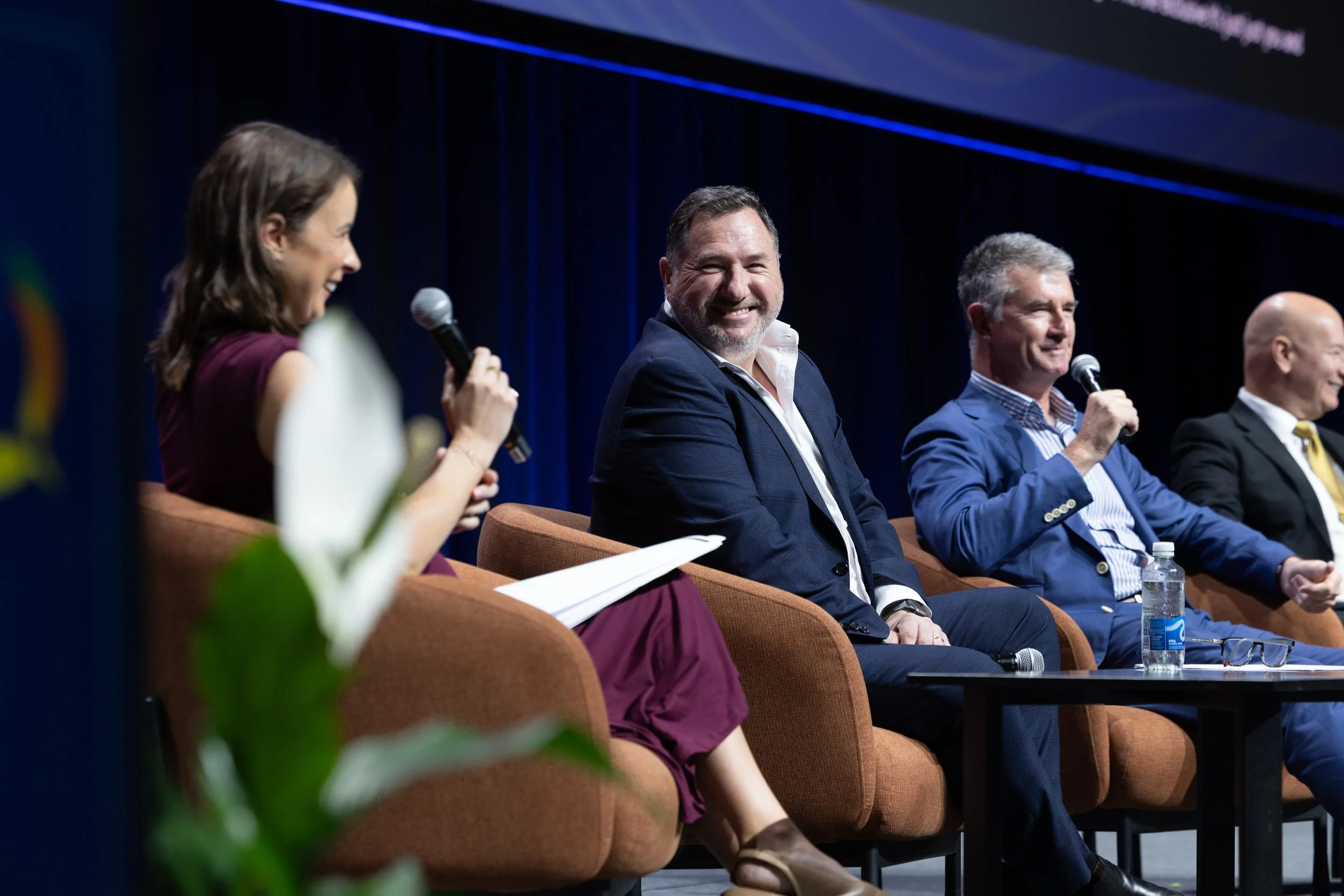
Queensland’s Tourism Minister, Andrew Powell MP, is determined for Queensland to be the events capital of Australia.
Queensland is making a serious play for events
If there was one theme that dominated, it was events.
The message couldn't have been clearer. Minister Powell is determined for Queensland to become the events capital of Australia, and committed to returning next year with a new events pipeline for the state.
Premier Crisafulli said, “Queensland will be the events capital of the country! We must continue to drive investment and think big!”
What I found particularly encouraging was the focus on regional dispersal. This isn't just about attracting major events to Brisbane or the Gold Coast. There appears to be a genuine commitment to ensuring regional communities benefit, and that's worth paying attention to. Events don't just drive visitation. They build community pride, strengthen destination identity, support local businesses and give visitors reasons to discover places they might otherwise never visit.

The 2032 Games featured heavily in discussions.
The Brisbane 2032 legacy is bigger than infrastructure
Like many people working in tourism, I've spent a lot of time thinking about Brisbane 2032 and what legacy will mean for regional communities. Most conversations tend to focus on infrastructure, hosting teams, event attraction and investment.
Then Martin Green from the UK challenged that thinking.
Drawing on his experience delivering an Olympic opening ceremony (amongst many other iconic events), he spoke about something often overlooked: the torch relay. Martin argued that the real power of the torch relay sits in its ability to tell local stories, build community pride and bring people together at a grassroots level. The torch relay will likely spend months travelling across Queensland ahead of the Games, moving through cities, towns and regional communities, creating countless opportunities.
The idea really landed with me.
Councils regularly ask how they can leverage the Games. Yet I haven't heard many people talking about the role the torch relay could play in regional Queensland. For many communities, it may become one of the most accessible and meaningful ways to connect local people to Brisbane 2032.
The 2036 visitor will look different than the 2026 visitor
Demographer Simon Kuestenmacher’s presentation was a timely reminder that the biggest changes shaping tourism over the next decade may simply come down to demographics.
One insight that really caught my attention was the prediction that Australia's traditional family market is likely to become increasingly stagnant as birth rates continue to decline. At the same time, significant growth is expected among travellers aged 30 to 50 travelling without children. That raises some important questions for destination managers. Are we developing experiences for tomorrow's visitor, or are we still designing products around yesterday's market? Are we thinking deeply enough about how changing family structures will shape demand?
The other challenge Simon highlighted was workforce.
In his view, the single biggest challenge facing Australian businesses over the next decade will be labour shortages as large numbers of workers retire. Regional communities may feel that pressure more than most, particularly where young people continue to leave smaller communities for education and employment opportunities. It's one of the reasons AI, automation and robotics featured so heavily throughout the day - businesses will increasingly need efficiencies wherever they can find them. The challenge for tourism will be embracing those efficiencies while protecting the human experience that sits at the heart of our industry.

Audience members soaking up these insights at QTIC’s DestinationQ and EventsQ
Consumer sentiment is low, value matters more than ever
One of the most useful sessions of the week came from Robbie Dalton and the team at Localis, who shared recent visitor data and emerging travel trends. While domestic performance has softened slightly, international visitation continues to grow, even as consumer sentiment remains very low. The message was clear: people still want to travel, but they are becoming increasingly selective about where they spend their money.
Trend 1: Value is becoming the deciding factor
Australians took a record 12.8 million overseas trips in the past year, with destinations such as Vietnam, Japan, Korea and Indonesia performing strongly. The reason: value. Right now, the Australian dollar stretches further in many Asian destinations, making them increasingly attractive to cost-conscious travellers. The lesson for destinations isn't that we need to become cheaper, but that we need to clearly demonstrate the value visitors receive for the money they spend.
Trend 2: China continues to drive growth
A striking statistic shared was that 41% of new international visitor spend came from China, and mostly in South-East Queensland! What was insightful of regions was that Chinese visitor spending in regional Queensland surges twice a year around Chinese New Year and Golden Week, particularly in destinations with iconic experiences such as the Great Barrier Reef, Cairns and the Gold Coast. For destination managers, the challenge is an interesting one. If Chinese travellers are increasingly seeking out icons, what is the iconic experience in your region?
Trend 3: Working Holiday Makers matter
Working Holiday Makers remain a critical part of Queensland's visitor economy, accounting for one in four international visitor nights. The data showed that for every 10% reduction in Working Holiday Makers, Queensland would lose approximately $116 million in visitor expenditure. They're not just visitors; they're a significant workforce and economic contributor.
Trend 4: Events continue to punch above their weight
The data reinforced what many destination managers already know: events remain one of the most effective tools for dispersal, visitation and regional spending. They don't just attract visitors; they create reasons to travel, extend length of stay and provide a hook for people to discover places they may not otherwise have considered.
Continuing the Conversation
Many of the ideas discussed at DestinationQ and EventsQ reinforced something we've long believed at Tilma: strong visitor economies are built through strong leadership, clear direction and communities willing to back themselves.
If your destination is thinking about Brisbane 2032, event development, visitor economy growth, destination planning or industry capability building, we'd love to help. Learn more about our work or contact our team at admin@tilmagroup.com.au.