
By Linda Tillman
Why read this? One of the world's most compelling place-based development stories offers practical insights and lessons on defining the role, scale and limits of tourism before success arrives.
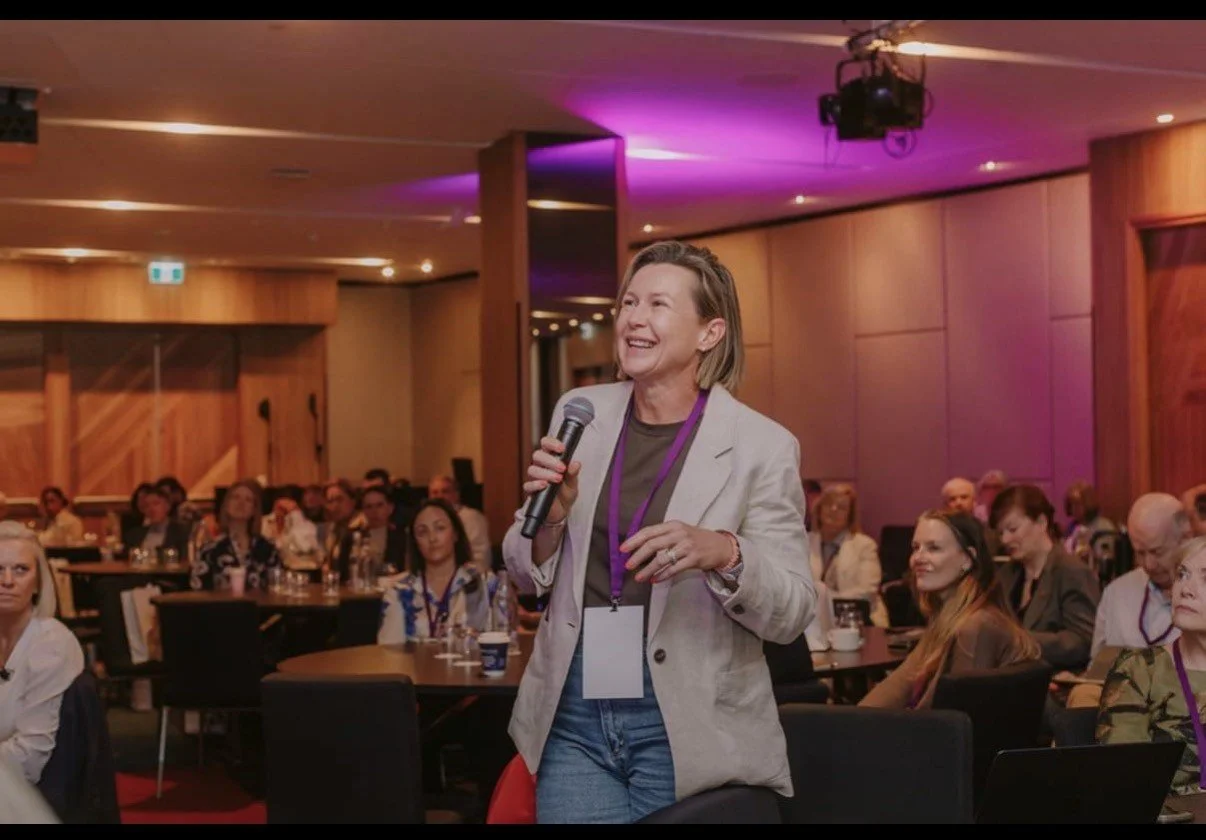
Linda asking Zita from the world-renowned Fogo Island, Canada, a question at the 2026 National Economic Development Conference.
There was one line during Zita Cobb's keynote address at the recent National Economic Development Conference in Tasmania that almost threw me off my chair.
"Tourism is dancing with the devil."
I loved it.
Zita is the Founder of Shorefast, a Canadian social enterprise established to strengthen the economic and cultural resilience of the remote Canadian island, Fogo Island, following the collapse of its centuries-old cod fishery. She is also the visionary behind the iconic Fogo Island Inn, a tourism experience built around local culture, people and identity that has become internationally recognised for its community-first approach to economic development. The Inn itself has earned global acclaim, including the prestigious distinction of three Michelin Keys, the highest recognition awarded to hotels.
I'd been looking forward to hearing Zita speak because the work coming out of Fogo Island is unlike anything I've come across. And in one sentence, she captured a challenge that many destinations face but few talk openly about.
If communities don't think carefully about the scale of tourism they want (at the start), and how they intend to manage it, success can quickly become a problem of its own.
We all know that tourism has delivered enormous benefits for communities around the world. It's helped create millions of jobs, attract investment, diversify local economies and create opportunities that wouldn't exist otherwise.
But one of the most powerful observations from Zita's presentation was that communities can sometimes start tourism, and then be crushed by it.
Her warning was simple:
Tourism can't be your only industry.
The scale has to be right for the size of the community... or you'll be dancing with the devil!
In tourism, we spend a lot of time talking about growth. We talk about increasing visitation, attracting more international flights, driving higher expenditure, and attracting high-yield visitors. We encourage communities to develop distinctive experiences, strengthen their destination identity, and create new products – all in the hopes of attracting visitors who stay longer and spend more.
Yet we spend far less time talking about what happens when we've succeeded, when demand keeps growing and a destination becomes more popular than anyone anticipated. The very success that communities worked so hard to achieve can start creating pressures of its own. Housing, infrastructure, environmental impact, and community sentiment all come under strain as the conversation shifts from attracting visitors to managing them.
Scale has a habit of getting away from you!
Managing success before it manages you
The now-famous Fogo Island Inn has achieved what many destinations aspire to. It is distinctive, deeply connected to place and recognised internationally. Built using local materials and local craftsmanship, it feels inseparable from the island itself.
What fascinated me most about the Fogo Island was the level of discipline and deep consideration of community and place behind every decision.
One story Zita shared was that around 80% of the food served at the Inn comes from the island itself. At one point they were using lemons in an olive oil recipe because they needed acidity. Then they thought "why were they using lemons when lemons don't grow on the island?". Rather than accepting it, they went searching for an alternative and eventually found a way to achieve the same outcome using ingredients sourced entirely from the island.
I just love that.
It's such a small detail yet reveals that every decision they make is considered through the lens of place, community and long-term impact. A lot of people talk about place-based development and community-led development, but I've never seen it in practice to that extent.
Listening to Zita, I found myself wanting to move there and work in that environment! It's easy to understand how demand has soared, but what I wanted to learn more about was how they approached the next challenge: managing success without compromising the place that created it.
At the end of her presentation, I asked Zita how they manage scale on Fogo Island.
Her answer was fascinating. Because Fogo Island is so unique, they can manage tourism through access. There are only so many people who can come onto the island at any one time, and they are very strict in how they manage that through the ferry trips.
It isn't a model that can be replicated in many Australian destinations, but it does provide food for thought. It demonstrates that managing success requires just as much thought as creating it.
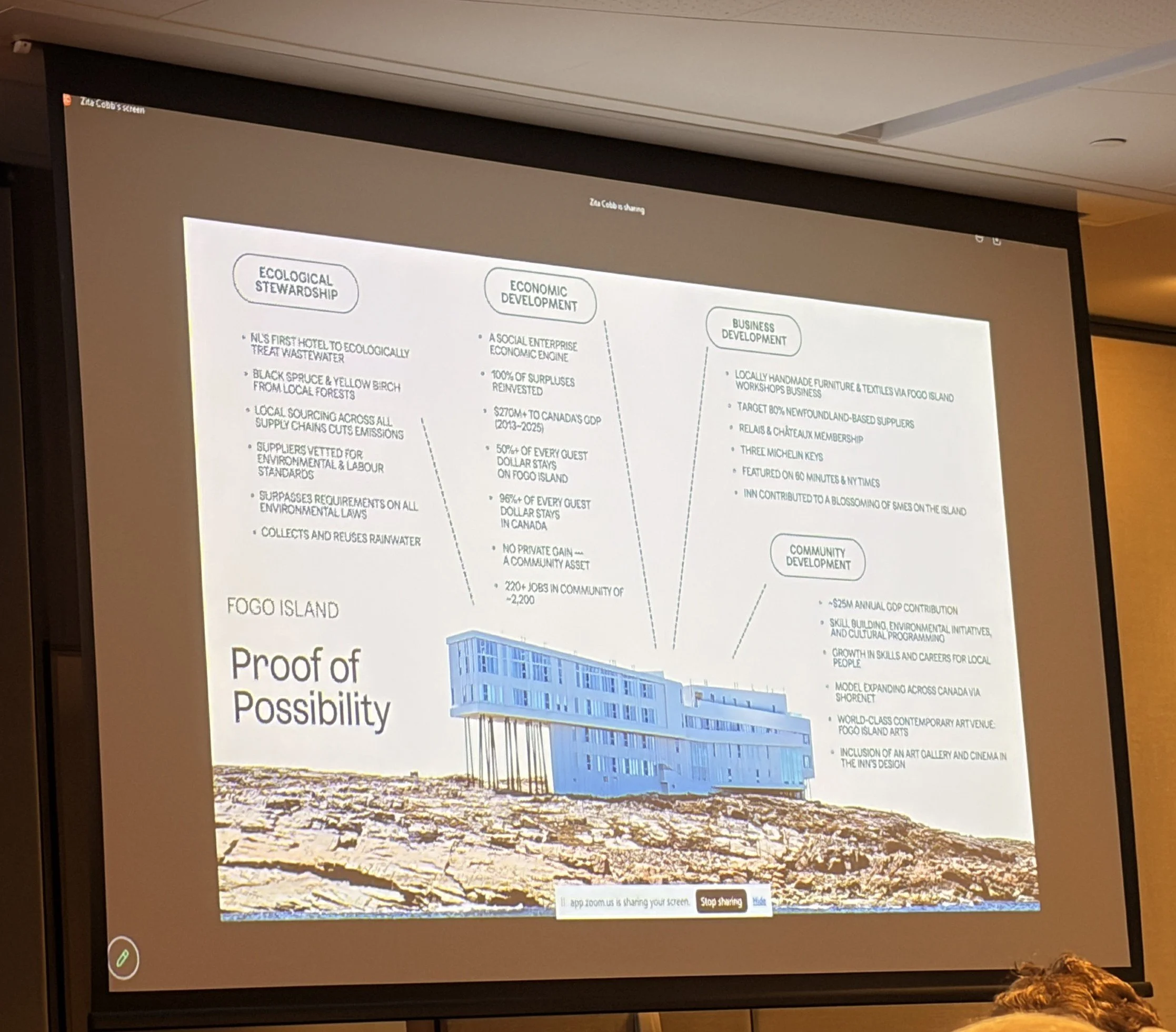
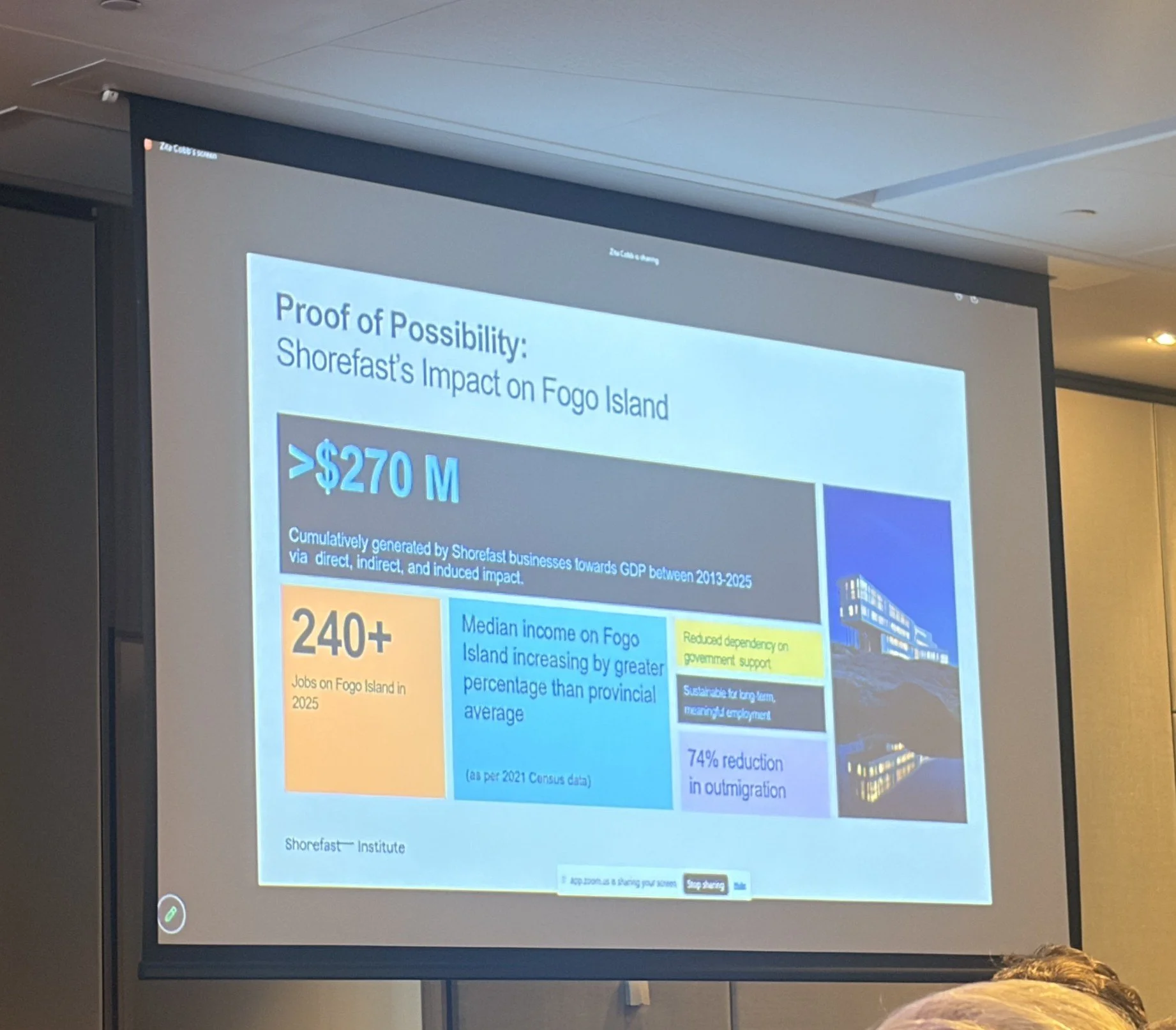
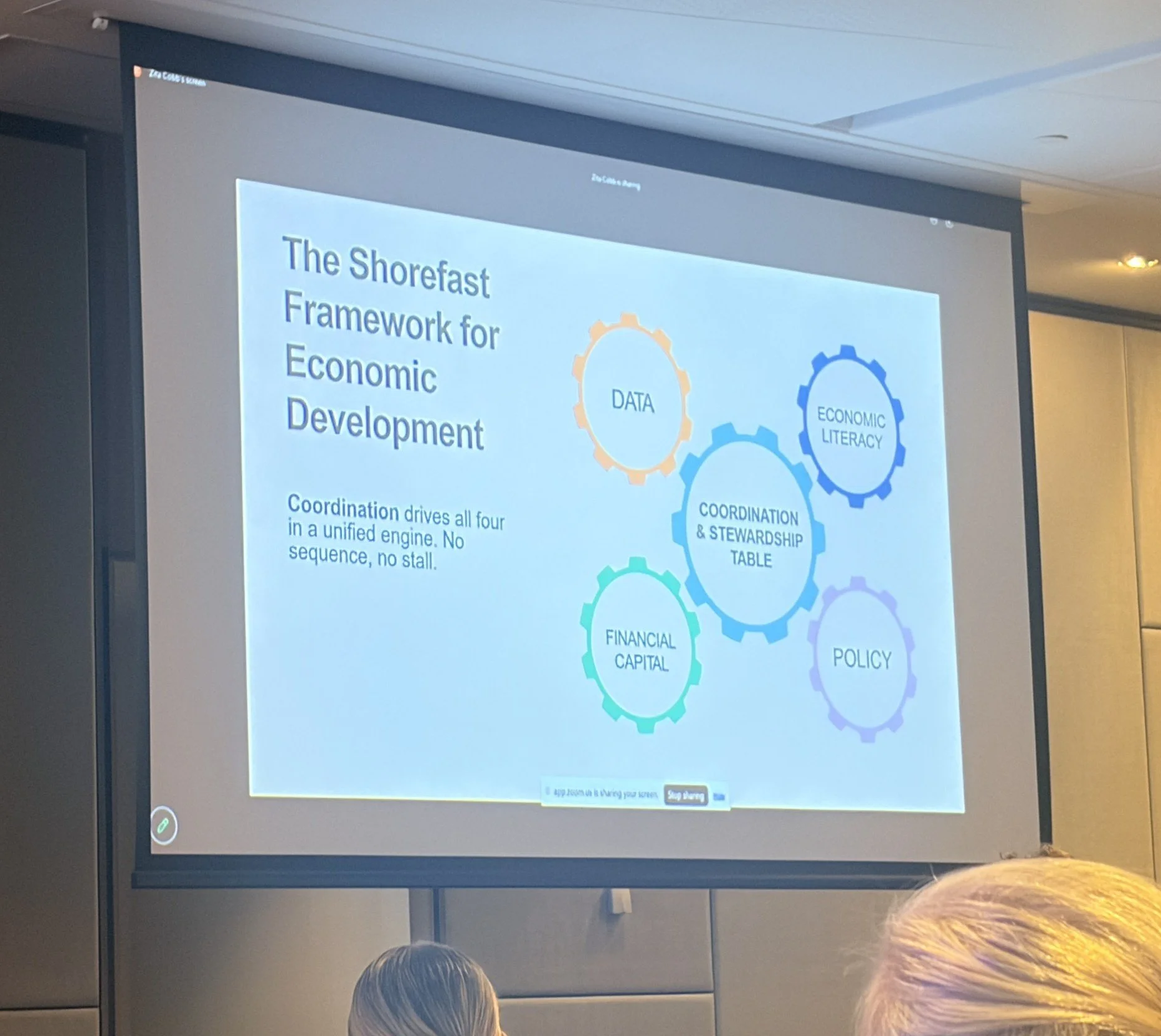
Slides from Zita’s incredible presentation at the Conference, highlighting the positive impact of Fogo Island Inn.
I've seen a similar approach closer to home through Kestrel Nest EcoHut in New South Wales, an incredible tourism venture that Tilma supported through grant funding and award submissions. The farm owners could easily have developed half a dozen highly profitable farm stay cottages across the property, but decided that one was enough. One EcoHut provides the income they need, and expanding further would come at the expense of the landscape, visitor experience and lifestyle they are seeking to protect. In an industry that often celebrates bigger, there is something powerful about an operator being clear on what "enough" looks like.
When success becomes the challenge
While Zita was speaking, I found myself reflecting on Byron Bay.
At Tilma, we recently worked on Byron Shire's Events Strategy with Jayne from JJ Strategic Consulting and contributed as subject matter experts to their Destination Management Plan. Throughout the engagement process, there was an incredibly strong sense that people wanted a locals-first approach. Whether discussing tourism, events or the broader future of the destination, the community consistently spoke about protecting local character, supporting residents, nurturing local artists, and ensuring decision-making remained grounded in what was best for the Byron community and environment. That level of engagement and stewardship was fabulous, but it also reflected a deeper challenge. Like many successful destinations, Byron is now navigating the complexities that come with popularity, and protecting what both visitors and locals love about the place - its nature and culture.
Destinations across Australia are wrestling with the same challenge: once tourism reaches a certain scale, the conversation changes. The focus shifts from attracting visitors to managing the impacts of popularity, while trying to hold onto the very qualities that attracted visitors in the first place.
I've seen similar tensions emerge through other projects, including our recent work developing a Nature-Based Tourism Strategy for Tourism and Events Queensland. Throughout that project, conversations repeatedly returned to the relationship between economic growth, environmental stewardship, and community wellbeing. We want stronger visitor economies and more international flights. But at the same time, nature and community are the very assets underpinning the visitor economy and need to be protected.
The challenge isn't choosing one over the other. It's understanding where the balance sits and being deliberate about managing it.
Know the role the community wants tourism to pay
Know the scale of tourism the community wants
Know how you will manage success before overtourism arrives
Measure community sentiment, so you can respond to it
Because once scale gets away from you, pulling it back is incredibly difficult.
Throughout the presentation, Zita returned to one idea:
"Optimise for place, otherwise we will not have places."
For me, that was the thread connecting everything she shared. The Inn. The food. The visitor experience. The discipline around visitor access. Every decision appeared to start with the same question: What is best for the place and the people who call it home?
I've rarely come across an example that seemed to apply those principles so consistently and thoughtfully in practice.
By the end of the presentation, I found myself thinking... that's how you do it.
Need help shaping the future of your destination?
If you're grappling with questions about tourism growth, destination management, community sentiment or the future role of tourism in your region, we'd love to help. Learn more about our work, or contact us at admin@tilmagroup.com.au.