
By Kayla Bauer
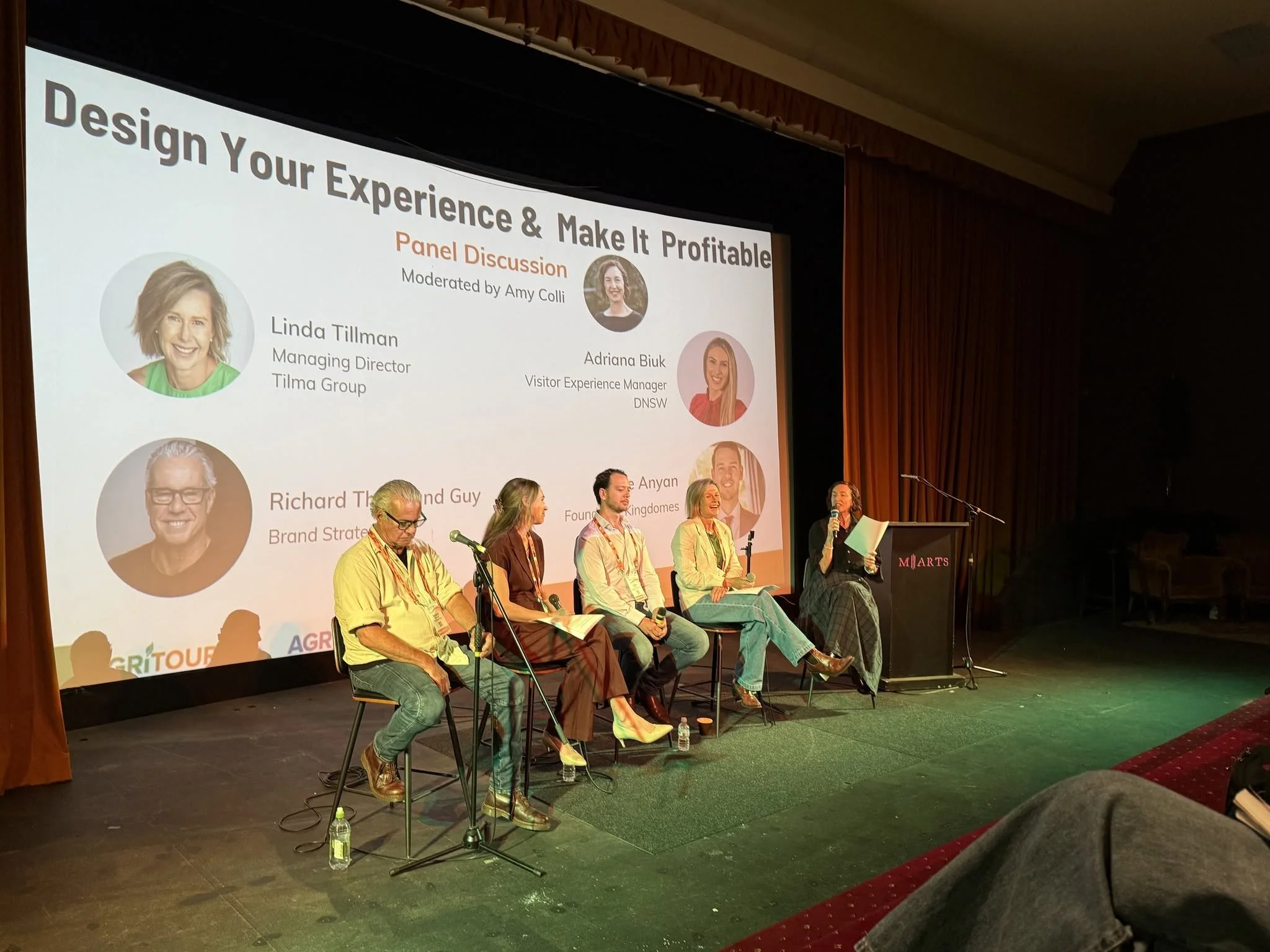
A panel discussion at the 2026 Agri & Agri-Aqua Tourism Summit
One of the most practical conversations at the 2026 Agri & Aqua Tourism Summit was about where to start.
During the panel discussion Design Your Experience & Make It Profitable, moderator Amy Colli from Tweed Tourism Co. put a deceptively simple question to the panel: What is the very first step a farmer should take when considering agritourism?
The answers that followed challenged some of the most common assumptions about the industry.
Many producers begin by thinking about infrastructure. They imagine a farm stay, a café, camping sites, weddings or a new visitor experience. Yet the panel argued that the strongest agritourism businesses rarely begin with a product. They begin with clarity.
Clarity of purpose. Clarity of values. Clarity of ambition.
Here are their recommendations.
1. Get clear on your why
Before thinking about accommodation, farm tours, events or any other visitor experience, spend time getting clear on why you're considering agritourism in the first place.
The answer will be different for every farm. For some, it may be about creating an additional income stream. For others, it could be enabling a partner or family member to work within the business, building greater resilience into the farm operation, or sharing your love of the land with others.
Whatever the reason, be honest and specific. Understanding what you're trying to achieve gives you something to measure opportunities against as they arise, helping you make decisions that support and are in line with your long-term goals.
2. Know what revenue you actually need
One of the most practical pieces of advice shared by the panel was to start with the numbers.
The panel encouraged farmers to get specific about the financial outcome they're trying to achieve. How much revenue does the agritourism venture need to generate, and what is that income intended to do? Funding a partner's role in the business, supporting succession planning, investing in infrastructure, or creating greater business resilience will all require very different levels of return.
By putting a clear number around the opportunity from the outset, farmers can more accurately assess whether an idea is commercially viable, how many visitors they need to attract, and whether the investment of time, capital and resources is likely to deliver the outcome they're seeking.
3. Be clear how agritourism will add value to your existing farm business
By definition, agritourism is an ancillary activity. In simple terms, that means it exists to add value to and support the core agricultural enterprise. It may create an additional income stream, strengthen customer relationships, help diversify risk, or open up new sales channels, but the farm must remain at the centre of the business.
Getting clear on this from the outset is critical. If agriculture no longer remains the primary activity, a business may be regarded as a tourism operation rather than a farming enterprise, which can have significant planning, taxation and land-use implications (and be very, very costly!).
Before investing in any agritourism idea, ask yourself a simple question: how does this directly support the farm?
A great example is Esk Beef, which participated in Somerset Regional Council's Agritourism Development Program delivered by Tilma. Together, Linda worked with farmer Ben to explore a range of opportunities, including accommodation, weddings and farm-based visitor experiences. The mentoring process began by understanding Ben's why. In this case, the goal wasn't simply to create another income stream. It was to build a loyal customer base for his premium branded beef and strengthen direct-to-consumer sales.
While a wedding venue was initially considered by Ben, it quickly became clear that it wasn't the most effective way to achieve that objective. During the mentoring process, Ben took the team on an informal tour of the property, sharing how the farm operated, the story behind the business and potential visitor areas. What quickly became apparent was how engaging that experience already was. Rather than creating something separate from the farm, the strongest opportunity was formalising and building on the stories, knowledge and farm experience he was already naturally sharing with visitors.
Today, farm tours at Esk Beef allow visitors to connect directly with the people behind the product and gain firsthand insight into how quality beef is produced, the care that goes into raising cattle, and the realities of farming through challenges such as drought. In turn, those experiences have helped build a loyal customer database that supports direct-to-consumer meat sales.
The agritourism experience isn't operating independently of the farm. It's helping grow the farm business by turning visitors into loyal customers and strengthening direct-to-consumer sales.
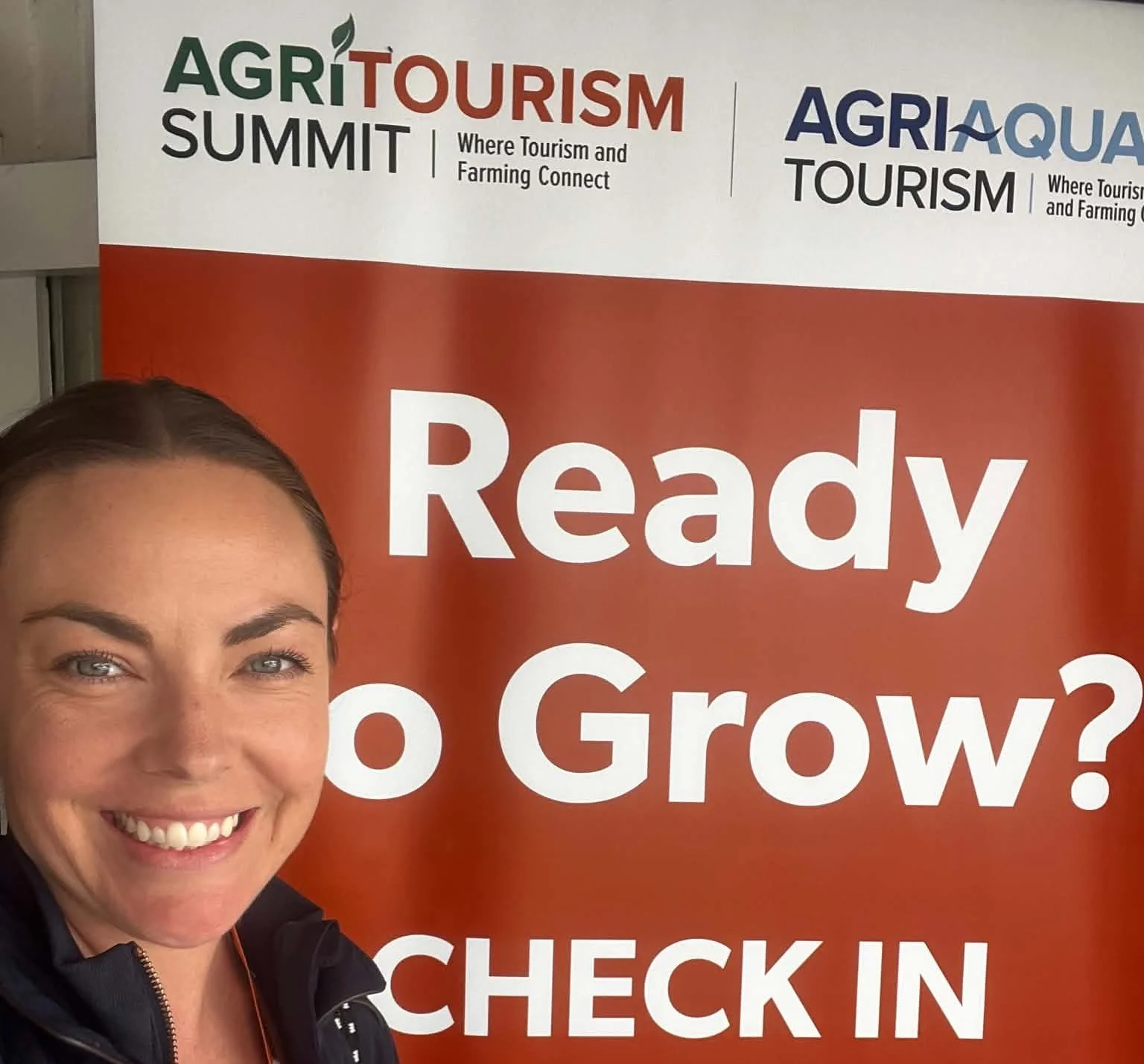
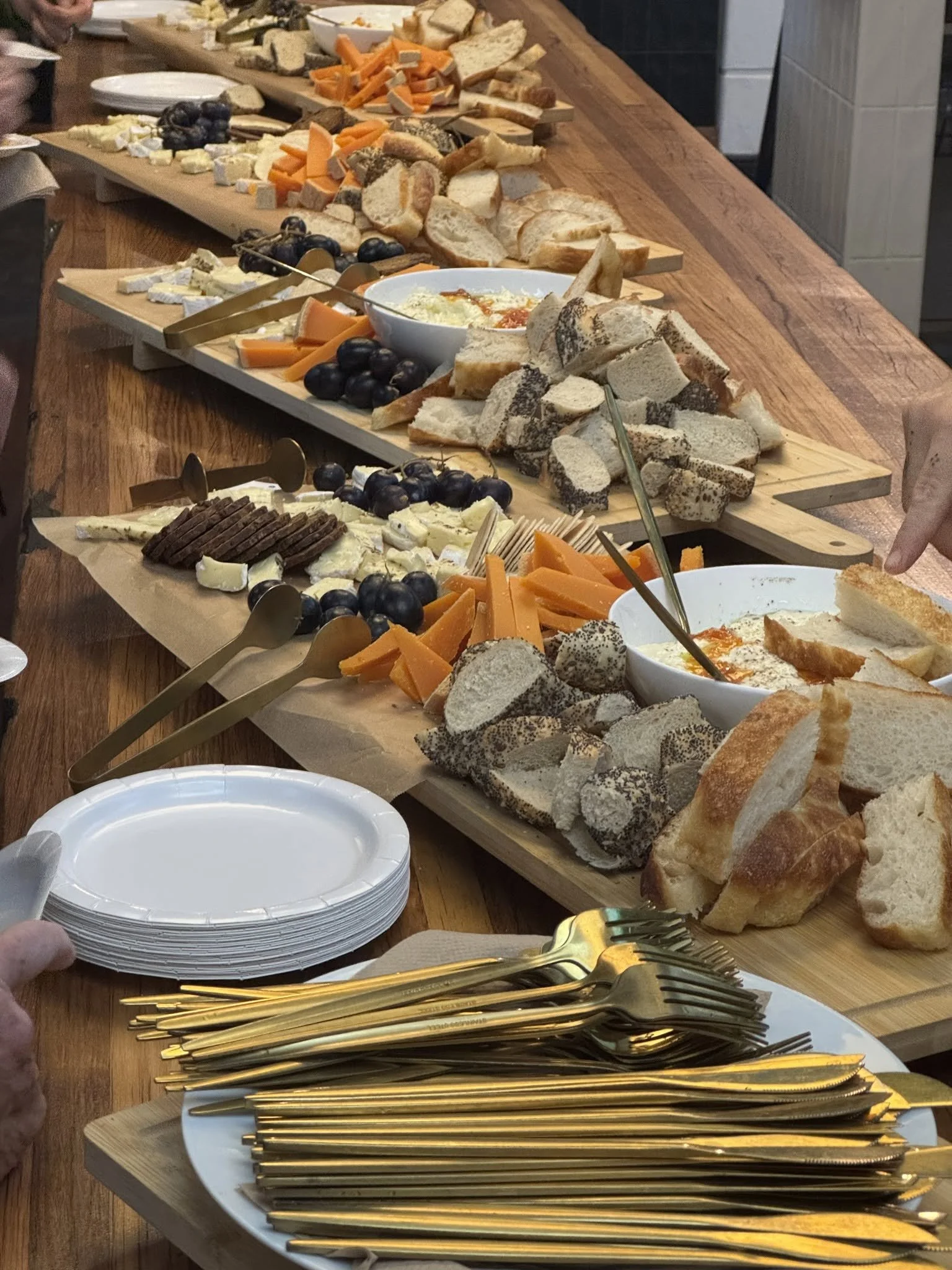
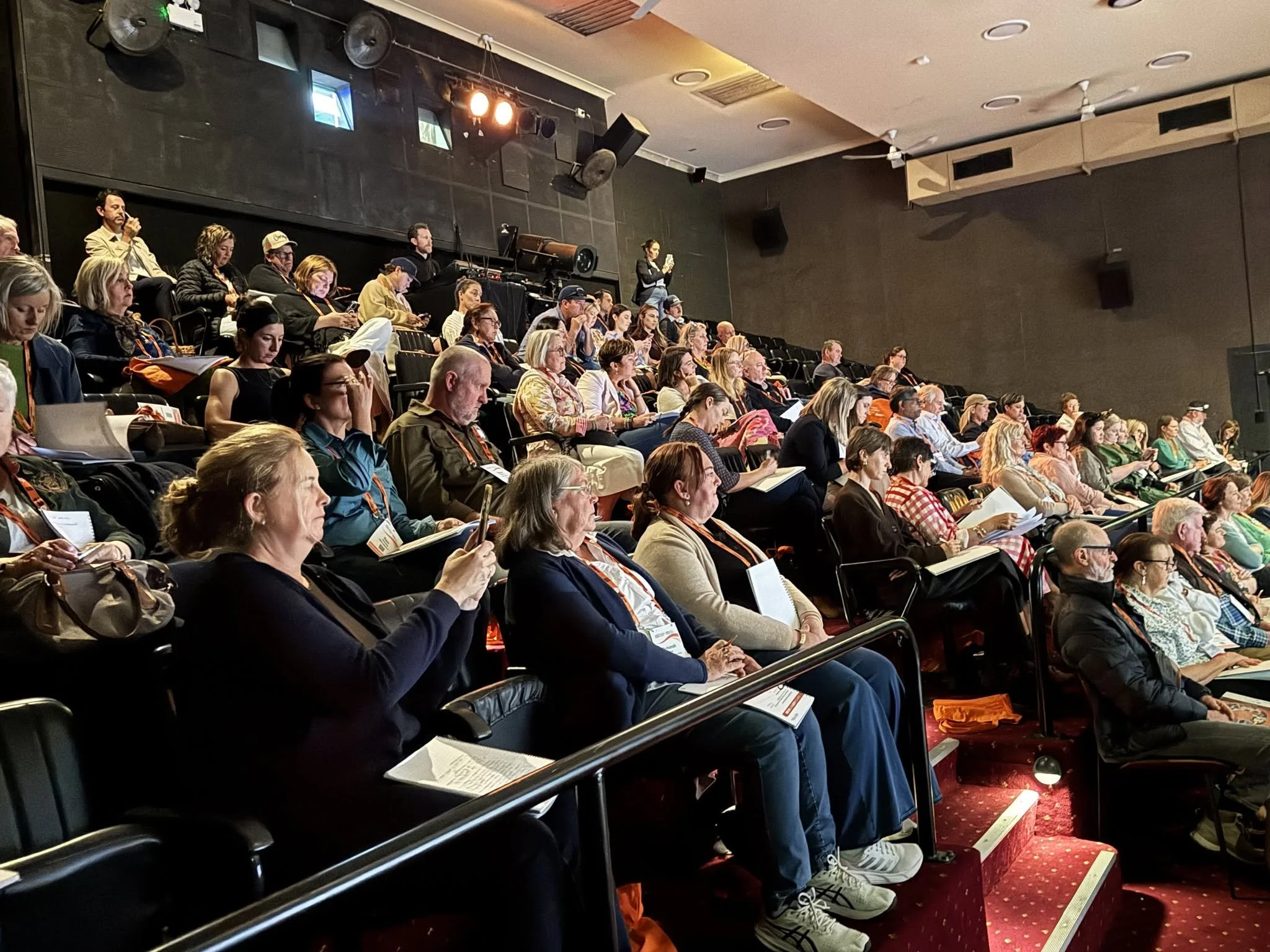
Kayla at the Summit, incredible local cheeses and the engaged audience. Images from the Agritourism Summit Facebook.
4. Check your values before making decisions
Not every agritourism opportunity belongs on every farm.
Before getting too attached to an idea, the panel encouraged producers to first consider what matters most to them, their farm, and their family. Some farms value privacy. Others prioritise conservation, education, community connection, or legacy.
Those values should shape the experience just as much as market demand does.
The most compelling agritourism businesses feel authentic because they are a genuine reflection of the people behind them. Visitors aren't looking for a manufactured tourism product. They're looking to connect with the farm, the family, and the values that have shaped the business.
5. Find your "red wine at midnight" vision
A thought-provoking contribution came from Richard Sauerman, better known as The Brand Guy, who encouraged producers to look beyond business plans, and spend some time thinking about their bigger vision.
What contribution do you want to make in the world?
What impact do you want your farm to have?
What are you ultimately trying to achieve?
Richard referred to this as your "red wine at midnight language". The big, bold conversations that happen when people stop talking about logistics and start dreaming about possibilities.
For some producers, it might be a desire to ensure every child knows what it's like to hold a warm egg fresh from the nest. For others, it could be creating a safe and relaxing place where Australians can disconnect from busy lives and reconnect with nature.
The strongest agritourism experiences are often built around an authentic, clear purpose and a meaningful contribution, with tourism simply becoming a vehicle to help bring that vision to life.
6. Think about how you want people to feel when they visit your farm
When planning an agritourism experience, it's easy to focus on what visitors will do… will they tour the farm? Feed animals? Pick produce? Enjoy a long lunch? Stay overnight?
The panel encouraged producers to take a step back and think about something deeper: how do you want people to feel?
That feeling might be connection. It might be curiosity, inspiration, relaxation, nostalgia or a newfound appreciation for farming and regional Australia. Whatever it is, getting clear on that emotional outcome helps shape everything that follows.
The feeling you're trying to create will influence your branding, the stories you tell, how you welcome guests and even the experiences you choose to offer. After all, visitors may forget exactly what they did on your farm, but they'll certainly remember how it made them feel.
7. Decide who your audience is and commit
You can't be everything to everyone.
In their final piece of advice when taking the first step, the panel encouraged producers to identify their ideal visitor early and keep that person in mind every step of the way. A family looking for a farm-based experience will have very different needs to a luxury traveller, or school group.
The clearer you are about who you're creating the experience for, the easier it becomes to make decisions about pricing, marketing, infrastructure and experience design. Knowing exactly who your audience is will help you create something they genuinely value.
Need help taking the first step?
At Tilma, we work with farmers across Australia to explore whether agritourism is the right fit for their business and, if it is, how to do it successfully. From clarifying your why, establishing financial goals and identifying the right visitor market, through to experience development, feasibility assessments and agritourism mentoring, we help producers build opportunities that strengthen the core farm business. If you're considering agritourism and would like some guidance, you can learn more about our agritourism services here. Or contact the team at admin@tilmagroup.com.au.
We look forward to hearing from you!