
Why read this? Seven practical lessons from economic development leaders on creating stronger communities, resilient visitor economies and places where people want to live, work and belong.
Every now and then, you attend a conference that genuinely stops you in your tracks. The kind of event that leaves you scribbling notes long after the final session ends, and rethinking parts of your work on the journey home.
That was my experience this week at the National Economic Development Conference in Hobart, hosted by Economic Development Australia. Built around the theme of People. Place. Prosperity. (topics we talk about every day in regional tourism!), the conference brought together economic development professionals, planners and regional leaders from across Australia to discuss the opportunities and challenges shaping our communities.
What I found most refreshing was how closely those conversations mirrored our own. It was a powerful reminder that tourism and economic development are not separate disciplines. Both are fundamentally about creating places where people want to live, work, invest and belong.
Congratulations to Economic Development Australia on delivering what was, for me, one of the most inspiring conferences I've attended in many years. I left with pages of notes, brilliant new connections, and a renewed spark for the opportunities that emerge when tourism and economic development work hand in hand.
Here are my seven key takeaways.
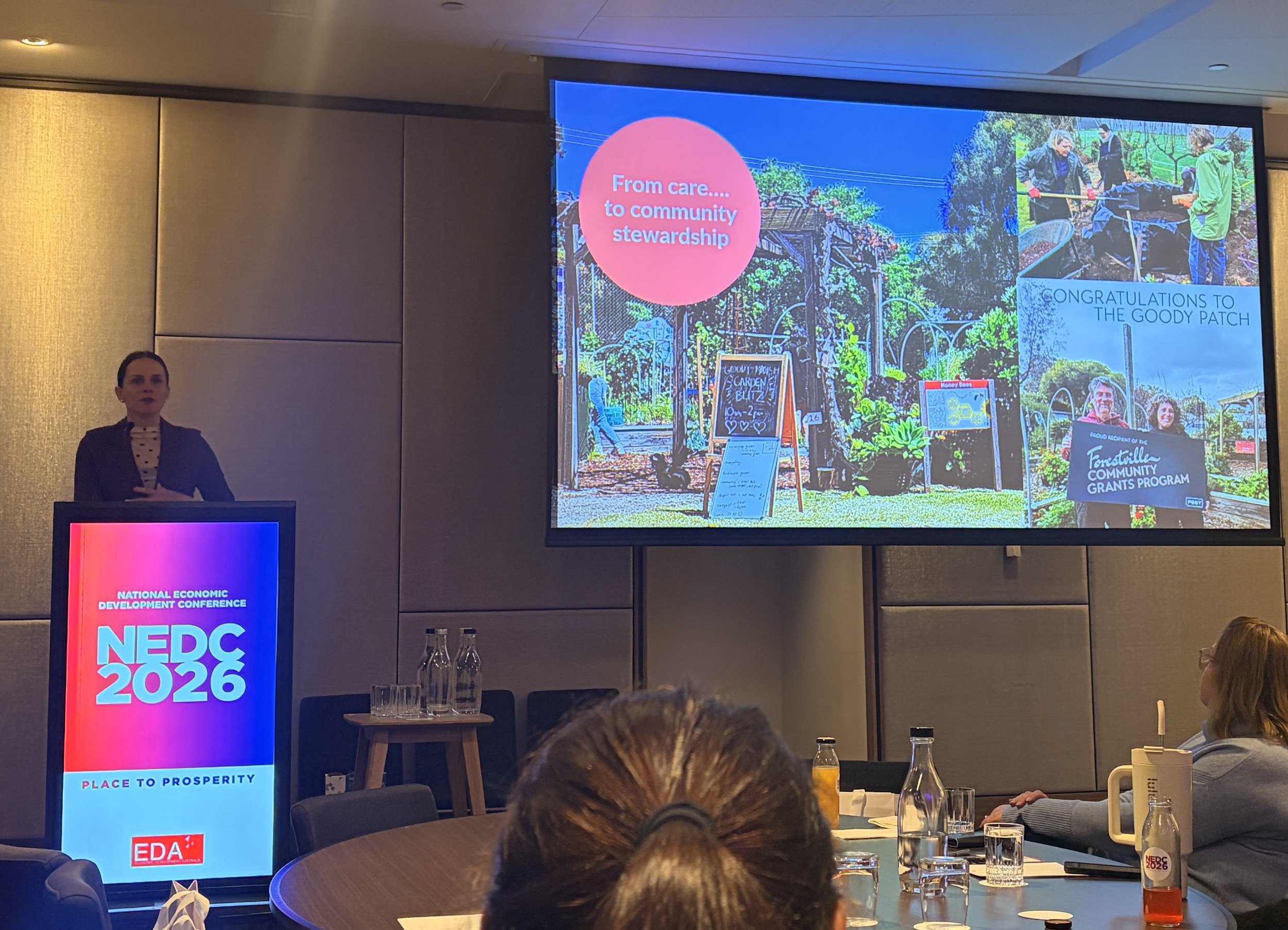
The conference gets underway... and I had no idea just how brilliant and valuable it would be!
1. The importance of people and place in developing a destination (beyond economics)
One of the strongest themes woven throughout the conference was that economic development succeeds when it is built around a place, and for the people who live there. Economic growth and community development aren't separate goals, they need to happen hand in hand.
A great example came from Tasmania, where the Premier announced this week a proposed community benefit fund linked to future AI data centre developments. I absolutely loved this idea! The principle is simple: if a community hosts major investment, that community should share in the benefits.
For destination managers, the lesson is just as relevant. Tourism growth should never be measured by visitor numbers or expenditure alone. Because if local businesses aren't benefiting, residents don't feel proud of their community, or growth comes at the expense of liveability, then we need to ask whether we're measuring success the right way.
Tourism is at its most powerful when communities can see and feel the benefits. That's where economic development and destination development become the same conversation.
2. Reputation is economic infrastructure
One of the most powerful ideas I heard during the conference came from Jess Radford, Acting CEO of Brand Tasmania, who said, "Reputation is economic infrastructure”.
As destination managers, we spend a lot of time talking about visitor centres, trails, roads, attractions and events. These are all important. But this session was a reminder that a destination's reputation can be just as valuable as any piece of physical infrastructure. One question from the session has stayed with me:
“Does your place authentically believe in itself?”
Another idea that resonated strongly was the shift from ‘doing’ to ‘stewarding’. Traditionally, place branding has focused on campaigns, content, partnerships, toolkits and programs. Stewardship takes a different approach… it focuses on strengthening a place's capacity to create value from its reputation, and ensuring the community itself becomes a custodian of that reputation.
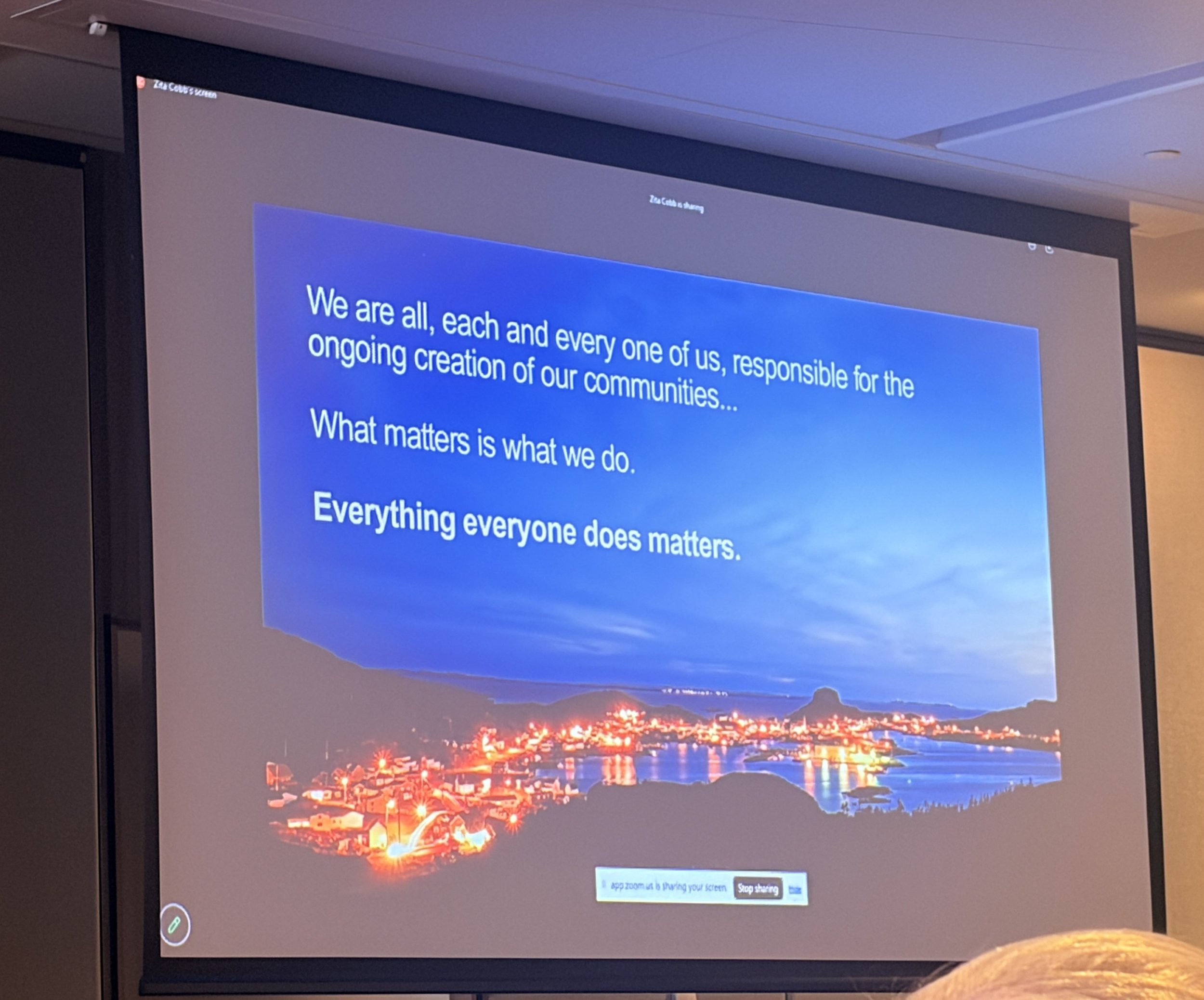
An impactful quote shared during the presentation.
The key takeaways from this session:
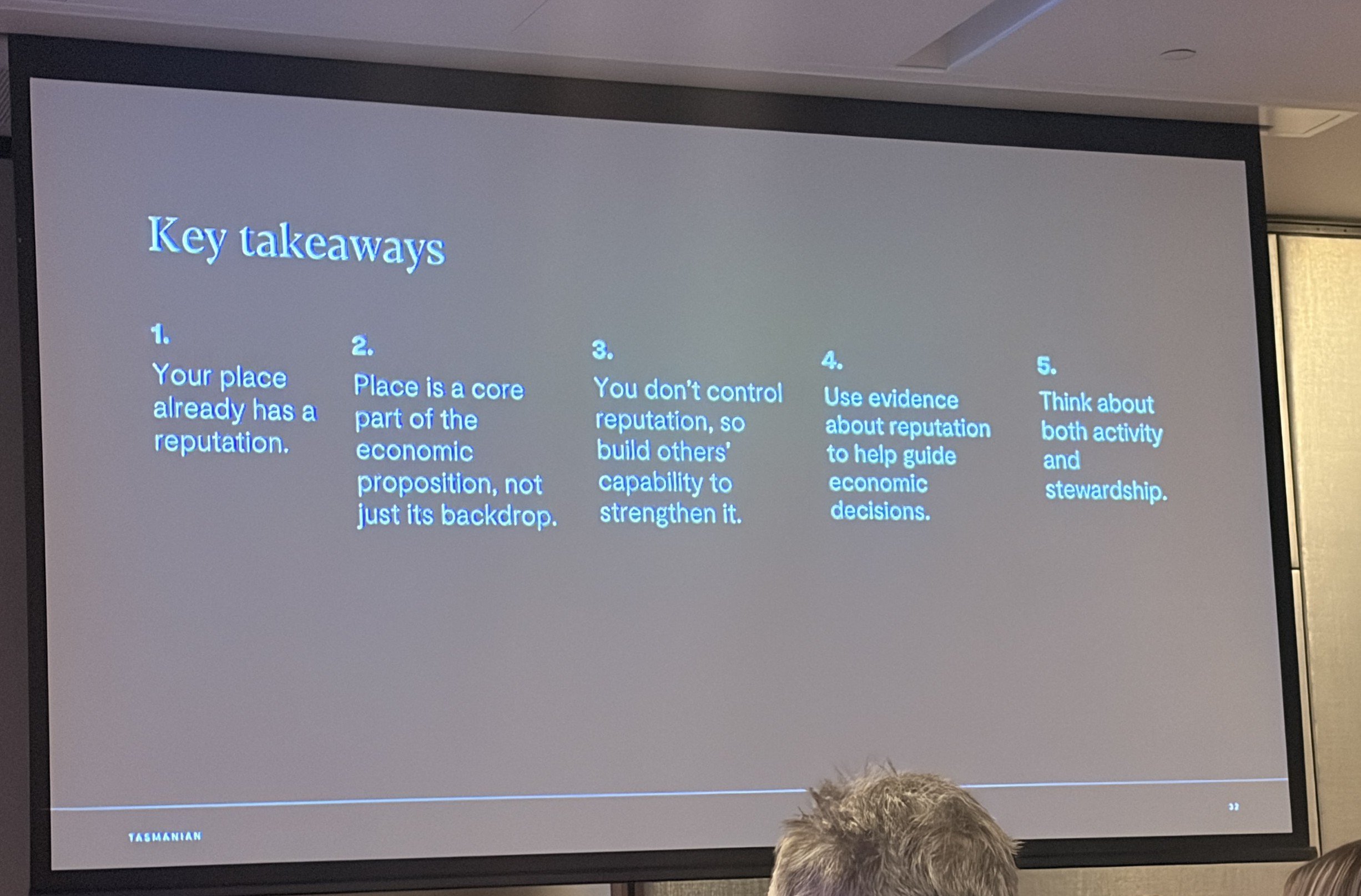
Key takeaways from the Brand Tasmania presentation.
For destination managers, there's an important lesson here: strong destination brands are built when communities understand who they are, value what makes them different, and actively participate in shaping how their place is experienced and understood.
3. A sense of belonging and community pride are your brand
A brilliant presentation came from Kath McCann, Chief Marketing Officer of the Tasmanian Devils Football Club. What stood out was how successfully they built a sense of belonging, and then brand, long before a team ever took the field.
The community launched the club themselves! There were no big PR firms, major campaigns or marketing budgets driving the movement, just a strong sense of trust, ownership, community pride and vision. Their goal was to unite Tasmanians around a shared identity. The message on screen captured it perfectly:
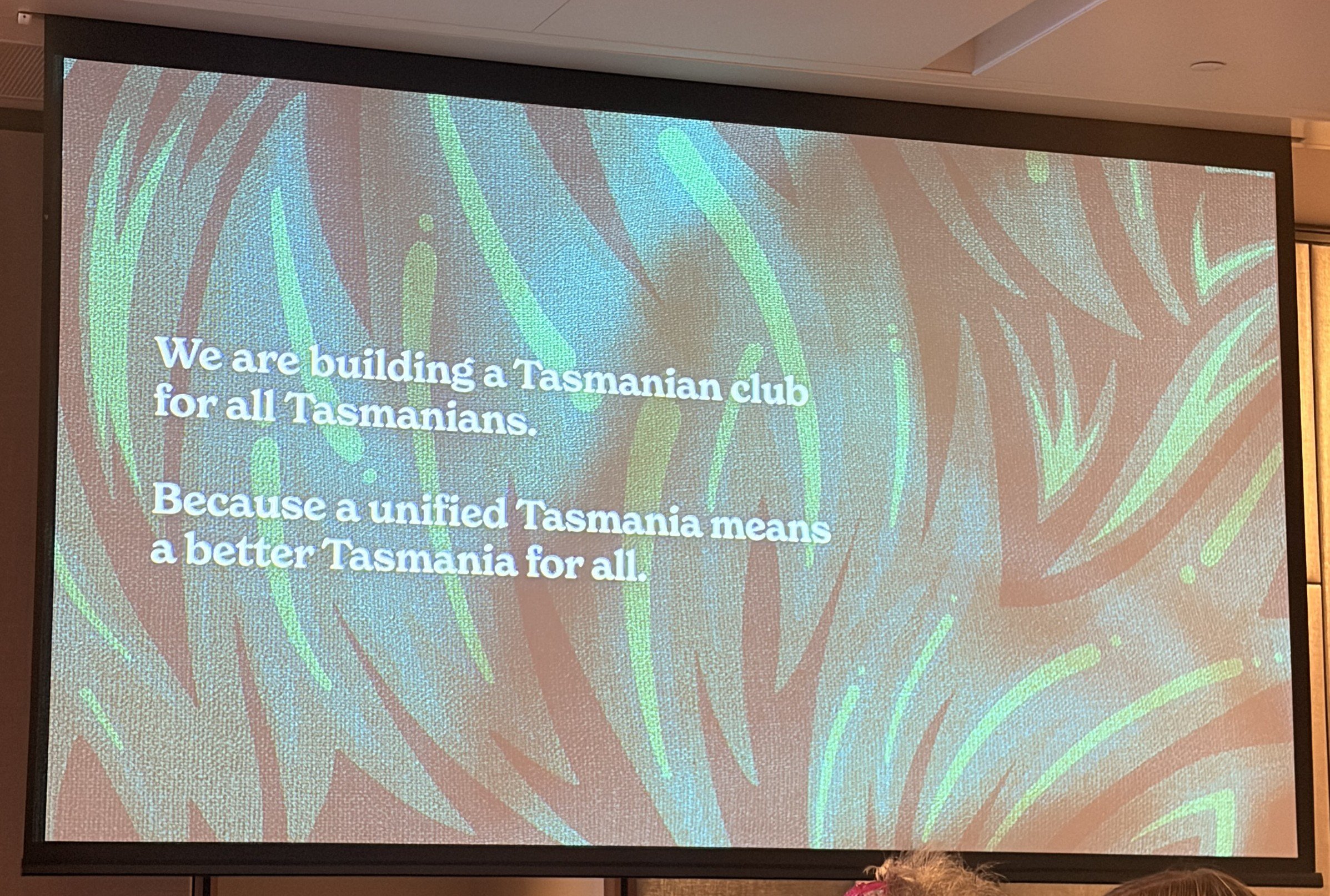
Quote from the Tasmanian Devils Football Club, shared during the presentation.
Strong brands are built when local people see themselves reflected in the story and feel genuinely connected to it. Community pride creates advocates, ambassadors and champions, and visitors can sense that authenticity when they arrive.
Many Tasmanians have now “come home” to be part of this football club. Incredible!
Another theme that surfaced throughout the presentation was the importance of being brave enough to be exclusively you! The Tasmanian Devils weren't trying to copy another club. They intentionally built a brand grounded in Tasmania's identity, values and character.
Destinations face the same choice. It is tempting to borrow ideas, slogans and positioning from places that appear successful. Yet the strongest destinations are usually the ones that embrace what makes them unique. It’s just whether we are brave enough to let the world know!
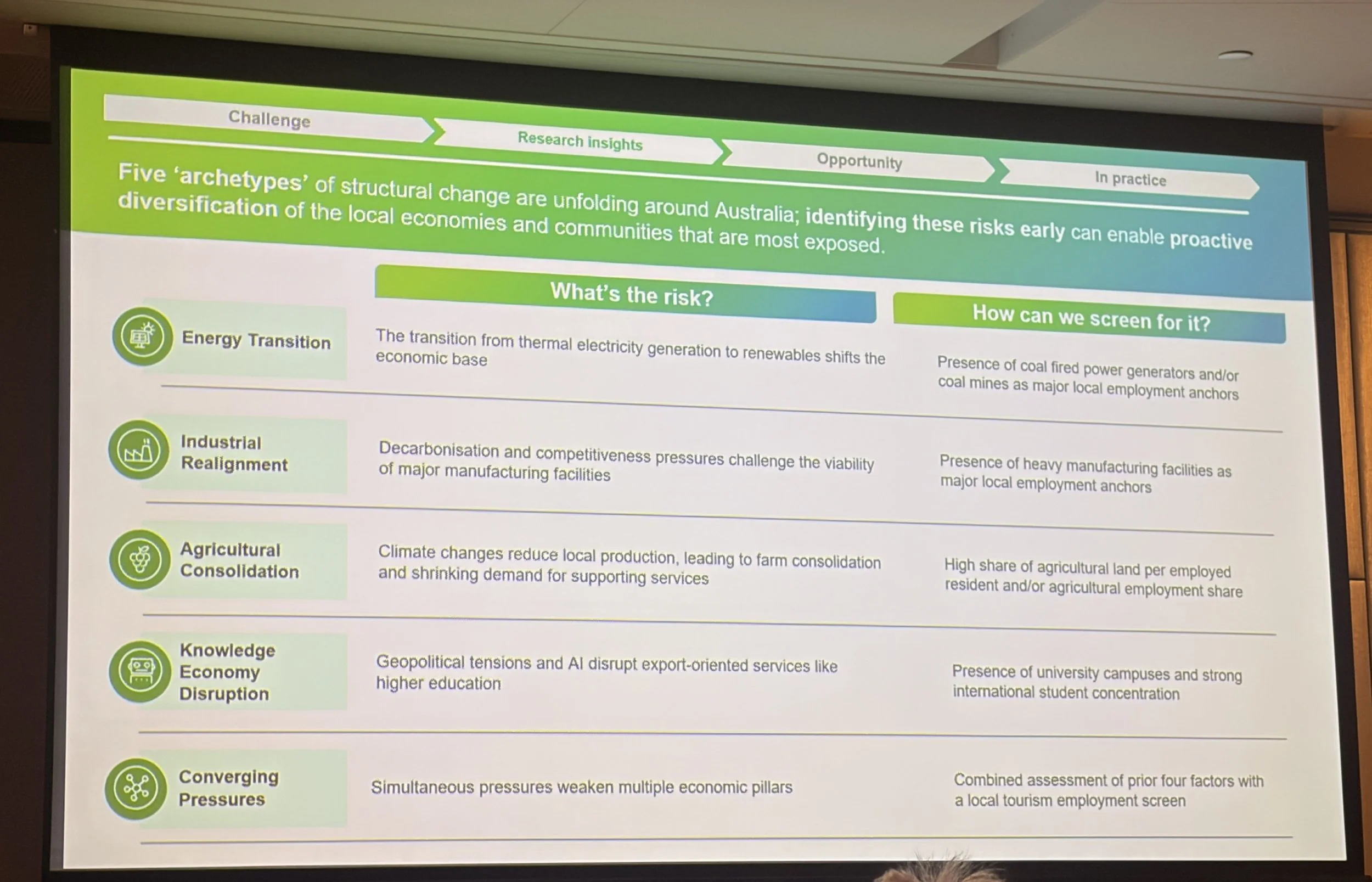
4. Successful economic diversification initiatives require a nuanced place/based approach!
One of the most confronting discussions of the conference centred on economic diversification.
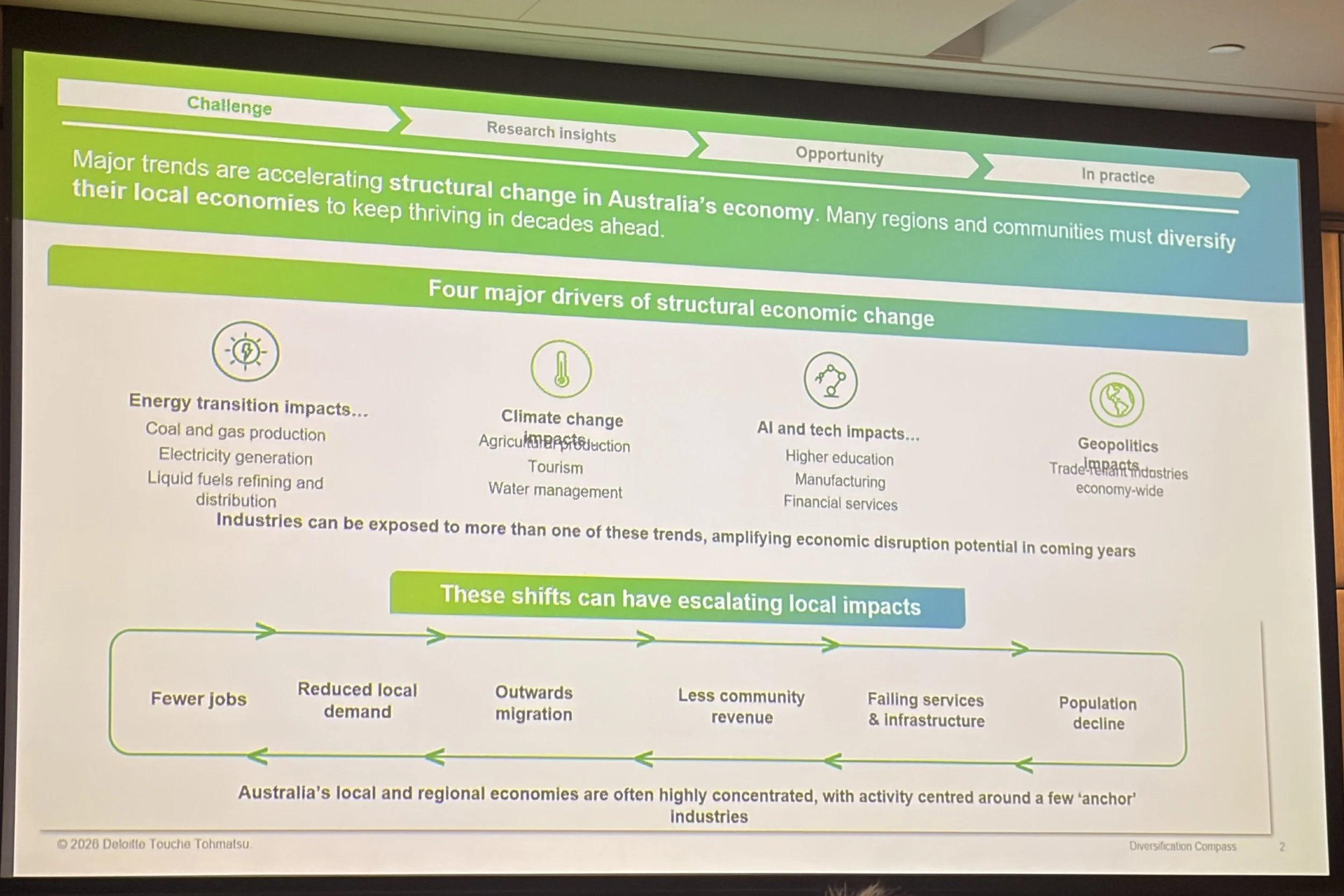
The message was clear: major structural changes are reshaping Australia's economy, and many regions will need to adapt if they want to remain prosperous over coming decades.
Research presented by Deloitte highlighted four major drivers of structural economic change:
Energy transition
Climate change
AI and technology
Geopolitics
What really caught my attention wasn't the trends themselves, but the flow-on effects at a local level: fewer jobs, reduced local demand, outward migration, less community revenue, declining services and infrastructure, and ultimately population decline.
The discussion challenged economic development professionals to think beyond attracting the next big project, and instead focus on diversification. Importantly, it was emphasised that diversification looks different everywhere. Successful diversification requires understanding a region's comparative advantages, workforce capability, infrastructure, policy environment, and community aspirations.
For destination managers, there is a very relevant lesson here - tourism isn't just a visitor economy activity, it's an economic diversification strategy.
The destinations that will be best positioned for the future won't simply be those with great attractions. They'll be the ones that understand where tourism fits within the wider economy and how it can help build resilience when other industries face disruption.
5. Be Courageous Enough to Lead
Newly released In From the Margins research, launched at the conference, revealed a significant shift in how economic development is viewed within local government. Almost 9 in 10 CEOs and GMs now consider economic development a core organisational priority, and conversations are increasingly focused on housing, infrastructure, workforce participation, investment attraction, industry development and planning.
But tourism professionals are often the first to spot emerging opportunities, whether that's agritourism, nature-based tourism, events, or new visitor experiences. The challenge is having the confidence to advocate for them.
City of Launceston’s CEO’s advice for economic development practitioners was be courageous!
Courageous enough to back an idea before everyone agrees with it. Courageous enough to advocate for investment. Courageous enough to keep showing up for your region when progress feels slow. Courageous enough to lead!
6. Optimise for place, otherwise we will not have places
A truly inspiring presentation came from Zita Cobb, a social entrepreneur born on the remote Fogo Island in Newfoundland, Canada, and the co-founder and CEO of Shorefast. I’ve shared how impactful I found Zita’s presentation here. Her story challenged many of the assumptions often made about economic development. At a time when so much discussion focuses on growth, productivity and efficiency, it was a refreshing reminder that development should strengthen a place rather than slowly strip away the very things that make it special.
On Fogo Island, ecological stewardship, community development, business development and economic development work together rather than competing against one another. The results have been extraordinary, generating more than $270 million in economic impact while creating local jobs, increasing incomes and reducing outward migration. Yet what impressed me most wasn't the numbers. It was the philosophy behind them.
Zita shared a quote from E.F. Schumacher that perfectly captured the approach:
"Nature and Culture are the two great garments of human life. Business and Technology are the two great tools that can and should serve them."
Too often, destinations start with the business opportunity and then try to fit culture and community around it. Fogo Island has done the opposite. Culture, nature and community sit at the centre, while business and economic development become tools to strengthen them.
Perhaps that's what Zita meant when she challenged us to "Optimise for place, otherwise we will not have places."
7. Machines will never replace human judgement
The final takeaway came from Professor Arnold Dix, and it couldn't have been more timely: “Machines will never take over a human's ability to critically think."
In a conference filled with many mentions of AI, technology and innovation, his simple reminder landed hard.
That felt like a good note to end on. 💚
Need help integrating economic development into your tourism landscape?
Tourism has an important role to play in economic diversification, and we’ve got an important role to communicate and connect the two. At Tilma, we help councils, destination managers and regional leaders turn opportunities into practical action through destination planning, agritourism development, capability building and implementation support. You can learn more about our services here, or contact our team on admin@tilmagroup.com.au.